

Department of Dermatology

Advanced Dermatology Residency Program
Our three-year, ACGME-accredited Advanced Dermatology Residency Program leads to eligibility for certification by the American Board of Dermatology. Candidates for certification are required to have a total of four years of postgraduate training, which includes an internship year of postgraduate training in an internal medicine residency. Our program starts in the second year (PGY2) for residents and has graduated more than a dozen physicians since receiving reaccreditation in July 2010.
Leadership
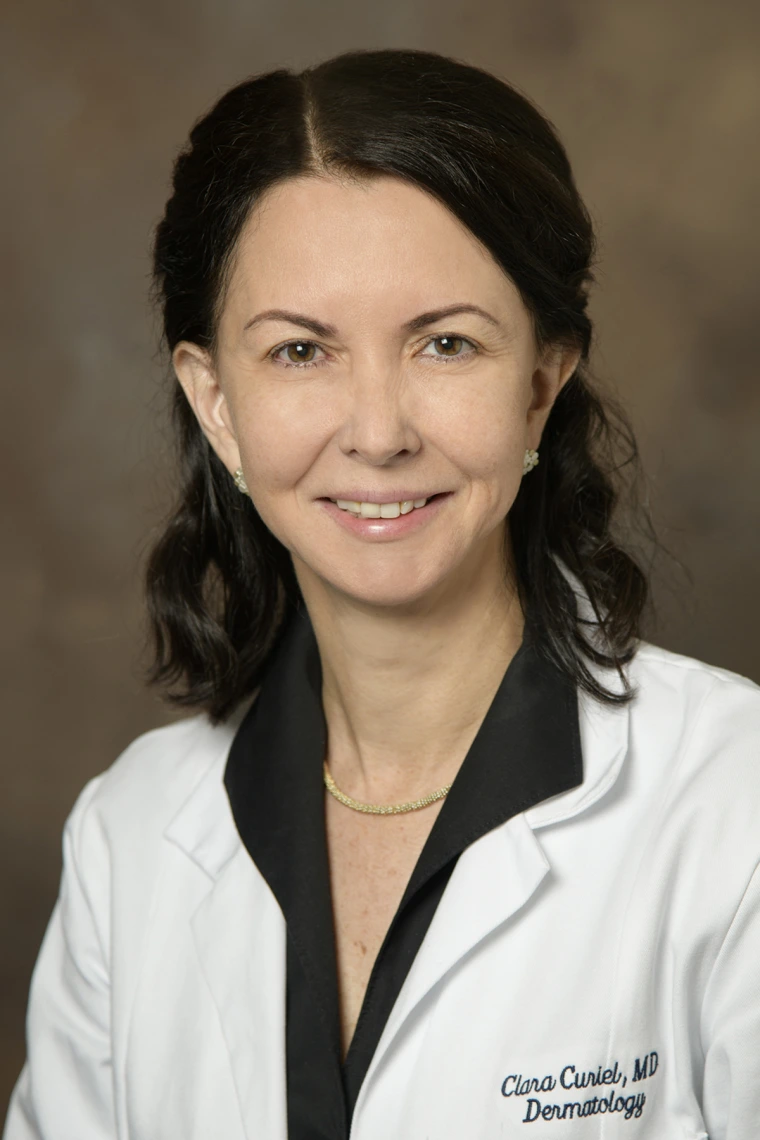
Clara N. Curiel-Lewandrowski, MD
Staff
Bersabe Lopez
About Our Program
We develop exceptional, well-rounded dermatologists through outstanding mentorship, broad clinical experiences, and the support and autonomy to become confident clinicians and future leaders. Our greatest strength is our people. We have built a culture where residents are supported and challenged, and genuinely enjoy working together. Faculty know each resident well and are committed to mentorship that extends beyond clinical training, helping residents grow into confident dermatologists and future leaders in the field.
Residents care for a diverse patient population with extensive exposure to complex inflammatory skin diseases and cutaneous oncology. Working alongside dedicated faculty across multiple clinical settings, residents develop the knowledge, procedural skills and clinical judgment needed to care for both common and highly complex dermatologic conditions.
Education is enriched through multidisciplinary collaboration, dedicated dermatopathology teaching, research opportunities and graduated autonomy throughout residency. Our goal is to graduate thoughtful, compassionate dermatologists who are exceptionally prepared for fellowship, academic medicine or private practice.
Residents will spend their three years of training in outpatient, surgical settings and inpatient.
Approximately one-third of each resident’s experience will take place at the Southern Arizona VA Health Care System (VA). Within this facility, residents will gain experience with outpatient clinics, surgery and inpatient.
The other two-thirds of each resident’s training will take place at Banner – University Medical Center North Campus and Banner – University Medical Center Pima Canyon.
We are looking to fill spots for the 2028-2029 academic year. We have already filled spots for the 2027-2028 academic year. The matching program for dermatology will coincide with the regular National Resident Matching Program (NRMP). The match, which takes place each March, selects residents to begin training July of the following year (e.g., in March 2025, we will pick residents to begin PGY-2 in July 2026).
All of the following materials must be submitted to ERAS:
- CV
- Three letters of reference
- USMLE scores
- ECFMG certificate (see “International Medical Graduates,” below)
- Medical school transcript
- Dean’s letter of support
- Certificate of completion (or good standing in) ACGME-accredited residency (can be in Anesthesiology, Family Medicine, Internal Medicine)
- Personal statement
Interviews are virtual, with no open houses prior to interview season. You must have taken USMLE Step 1 and 2 prior to interviewing.
International Applicants: We accept applicants eligible for J-1 visa status. Requests for other visa types are reviewed on a case-by-case basis by Banner – University Medical Group. Graduates of foreign medical schools must have a standard ECFMG Certificate.
Applicants who have completed a previous residency are encouraged to apply through ERAS. If you were to match with our program, you would have a gap year before starting with us the following July as a PGY2 instead of having a transitional intern year as most do. Previously completing a residency would not affect funding slots.
Curriculum
Residents will be assigned to these clinics during all years of training. All clinics will be staffed by an attending physician. The residents will obtain exposure to all aspects of medical dermatology, dermatologic surgery and cutaneous oncology. Residents are expected to see patients to obtain a history and physical examination, and then formulate a differential diagnosis and a treatment plan with the guidance of the attending physician.
During PGY 2-4, residents will rotate on this service and daily learning will take place at the patient bedside with the attending physician assigned to this service.
Dermatologic surgery cases will be performed in all years of training with increasing complexity of excisions and closures (including flaps and grafts) throughout the years of training. Cases will be performed under the direct supervision of attending dermatologists. Assigned surgical rotations will also be performed in the second and third years. During these rotations, the resident will participate in all aspects of care of the surgical patient including the evaluation, surgical planning, surgery and postoperative care of general dermatologic surgery patients as well as patients having Mohs micrographic surgery. These rotations will be under the direct supervision of the dermatologic surgery faculty.
Residents will receive exposure to reading dermatopathology slides throughout their residency through weekly unknown slide sessions as well as by completing four months of formal dermatopathology rotations in both the second and third years. Residents on the dermatopathology rotation will receive direct one-on-one training in immunofluorescence and electron microscopy for diagnosis of immunobullous disease.
Residents of all years will see pediatric patients in the outpatient setting at Phoenix Children’s Hospital Tucson campus and inpatient settings at the Banner facilities in Tucson.
The primary source of cosmetic training will be Dr. Comstock, a highly renowned cosmetic dermatologist. Residents will have exposure to various cosmetic procedures, including injection of botulinum toxin/fillers and deoxycholic acid, along with chemical peels. Residents will perform cases with a variety of different lasers for the management of vascular malformations, tattoo removal and hair removal. They will also gain exposure to ablative and non-ablative laser modalities for skin rejuvenation. The Aesthetics Program and Laser Center at Pima Canyon is a collaborative approach between ENT, plastic surgery and oculoplastics. We have eight lasers with over 15 modalities, including PDL, KTP, CO2, IPL, Erbium, Nd:YAG and non-ablative fractional.
The residents will learn to use narrow band phototherapy and photodynamic therapy to treat inflammatory dermatoses and cutaneous T-cell lymphoma.
The Department of Dermatology maintains an active research program both in basic science and in clinical research. There is active ongoing research in cutaneous oncology and inflammatory skin conditions. Elective rotations in research are also available in the third year to residents wishing to increase their exposure to clinical or basic science research.
Graduate Medical Education
Training in Tucson

Learn about salary and benefits, as well as things to do in Tucson, our desert climate and the region’s culture.
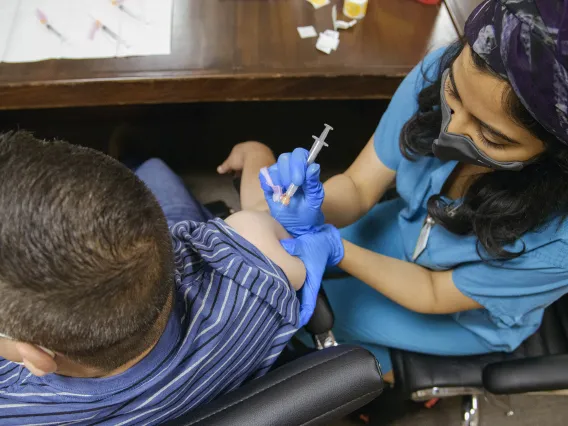
Be better prepared to serve your Spanish-speaking patients.
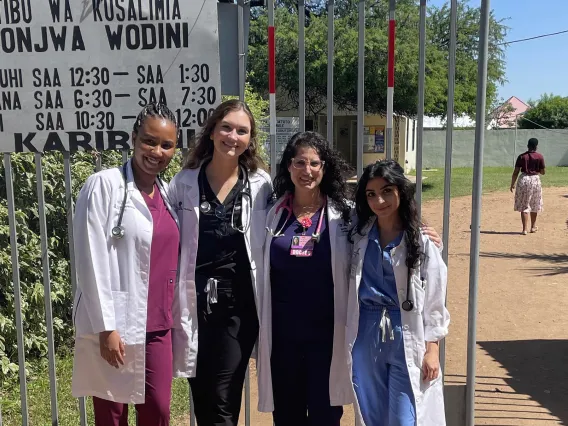
Practice in developing nations, learning from experts abroad.
Learn about events across the college or filter results according to interest.

We’re committed to providing resources to support your well-being.
Learn more about the residency and fellowship programs at the College of Medicine – Tucson.
Bersabe Lopez
Program Coordinator, Senior
bersabelopez@arizona.edu