

Radiology and Imaging Sciences
Neuroradiology

Academic Leadership and Innovation in Neuroradiology
The Division of Neuroradiology trains the next generation of radiologists to provide cutting-edge diagnostic imaging and interventional therapies for conditions involving the central and peripheral nervous system, spine, and head and neck.
Residents, fellows and medical students benefit from
- State-of-the-art imaging systems: including 3T MRI, high-speed multidetector CT, CT/MR perfusion, fMRI, DTI and advanced angiographic suites
- Hands-on experience with advanced protocols: enabling precise evaluation of complex neurovascular, neurodegenerative, oncologic and trauma-related conditions
- AI-enhanced, real-world workflows: working directly with neuroradiology faculty using cutting-edge analysis tools and multidisciplinary case review practices
Future neuroradiologists learn to identify subtle abnormalities and guide treatment through detailed assessments of the central and peripheral nervous system. Imaging protocols are optimized for clarity, efficiency and patient comfort, ensuring accurate diagnosis and seamless integration into multidisciplinary care plans.
Faculty and trainees in our division collaborate closely with colleagues in interventional radiology, neurology, neurosurgery, ophthalmology and vision science, and otolaryngology and head and neck surgery. Our division participates in multidisciplinary conferences, including specialized epilepsy boards.
Through our clinical partnership with Banner – University Medicine, medical students, residents and fellows are trained to operate state-of-the-art imaging technologies to diagnose a wide range of neurological conditions — from routine assessments to complex cases.
- MRI (3T and 1.5T): Advanced protocols including DTI, DCE/DSC perfusion for tumor and stroke evaluation, rapid stroke imaging, dementia assessment.
- High-resolution CT scanning: Multi-slice systems with volumetric protocols enable 3D reconstructions while minimizing radiation exposure.
- Functional and quantitative MRI: Techniques such as fMRI, MR spectroscopy and tractography provide insights into brain function, metabolism and connectivity.
- Neurovascular imaging: CTA, MRA and time-resolved techniques enhance evaluation of cerebrovascular disorders and guide interventions.
Residents, fellows and medical students train alongside our neurointerventional radiology team as they perform a wide range of image-guided neurovascular procedures. Trainees gain hands-on experience with minimally invasive techniques that combine the precision of advanced imaging with the expertise of specialists trained in both radiology and endovascular care. This immersive environment prepares learners to manage complex, high-acuity neurological conditions with confidence and skill.
Trainees Learn About:
- Stroke intervention, including mechanical thrombectomy for acute ischemic stroke
- Brain aneurysm treatment such as coiling, stent-assisted coiling and flow diversion
- Arteriovenous malformation (AVM) embolization
- Carotid and intracranial stenosis management
- Spinal vascular disorder treatment
- Tumor embolization: pre-operative or palliative
Working collaboratively with neurology, neurosurgery and emergency medicine across Banner – University Medicine and the University of Arizona, our neurointerventional radiologists provide 24/7 care for time-critical conditions. This high-acuity, team-based environment offers learners invaluable experience in acute stroke intervention, complex neurovascular decision making and multidisciplinary patient management.
Trainees also engage in ongoing research efforts that advance the future of minimally invasive neurovascular treatment.
Division Chief
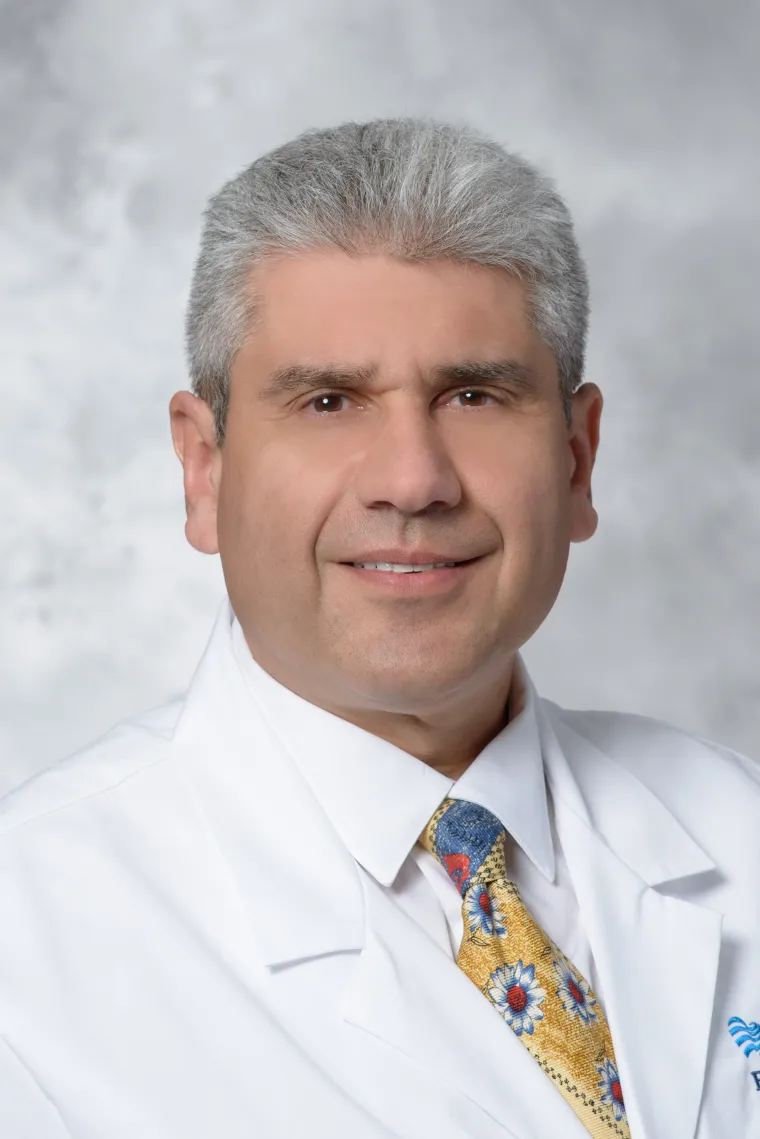
Hasan Ozgur, MD
Clinical Specialties
Division Faculty

Raymond Carmody, MD, FACR

Trevor Huff, MD

Wayne Kubal, MD

Daniel Lee, MD

Luke Miller, MD

Shaymaa Mohammed, MBChB

Karthik Rayasam, MD, FRCR

Bekir Sanal, MD

Evan Sommer, MD, MBA

Unni Udayasankar, MD, FRCR
Academic Excellence

Medical students can explore the field of radiology through rotations and electives.

We offer residency programs in diagnostic radiology and interventional radiology.

Trainees are enriched by a high-volume and complex case mix and a range of pathologies.