

Radiology and Imaging Sciences
Diagnostic Radiology Residency Program
Find rigorous, high-acuity training in a collaborative academic environment. Residents train at Banner – University Medical Center Tucson, a Level I Trauma Center and major regional referral hub, where they gain hands-on experience with complex pathology and advanced imaging across every subspecialty. Our program blends exceptional clinical volume with personalized mentorship, structured education and a culture that prioritizes resident growth and well-being.
Program Director

Tyson Chadaz, MD
Clinical Specialties
Associate Program Directors
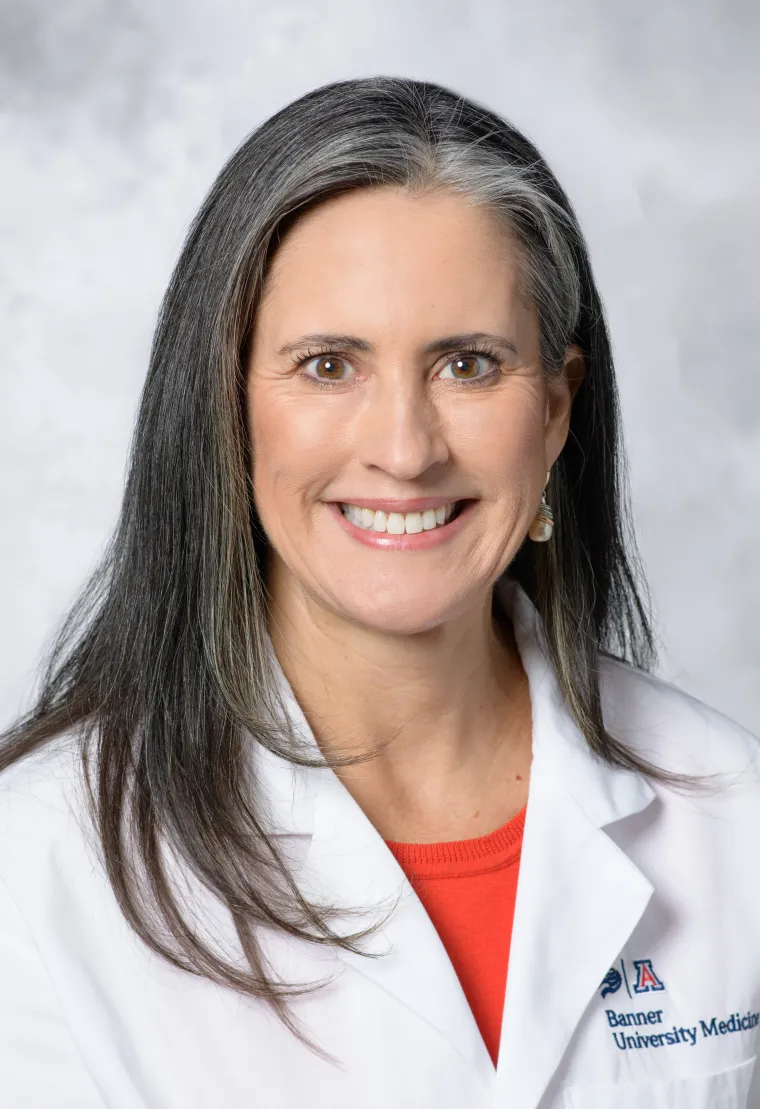
Dorothy Gilbertson-Dahdal, MD, FACR
Clinical Specialties
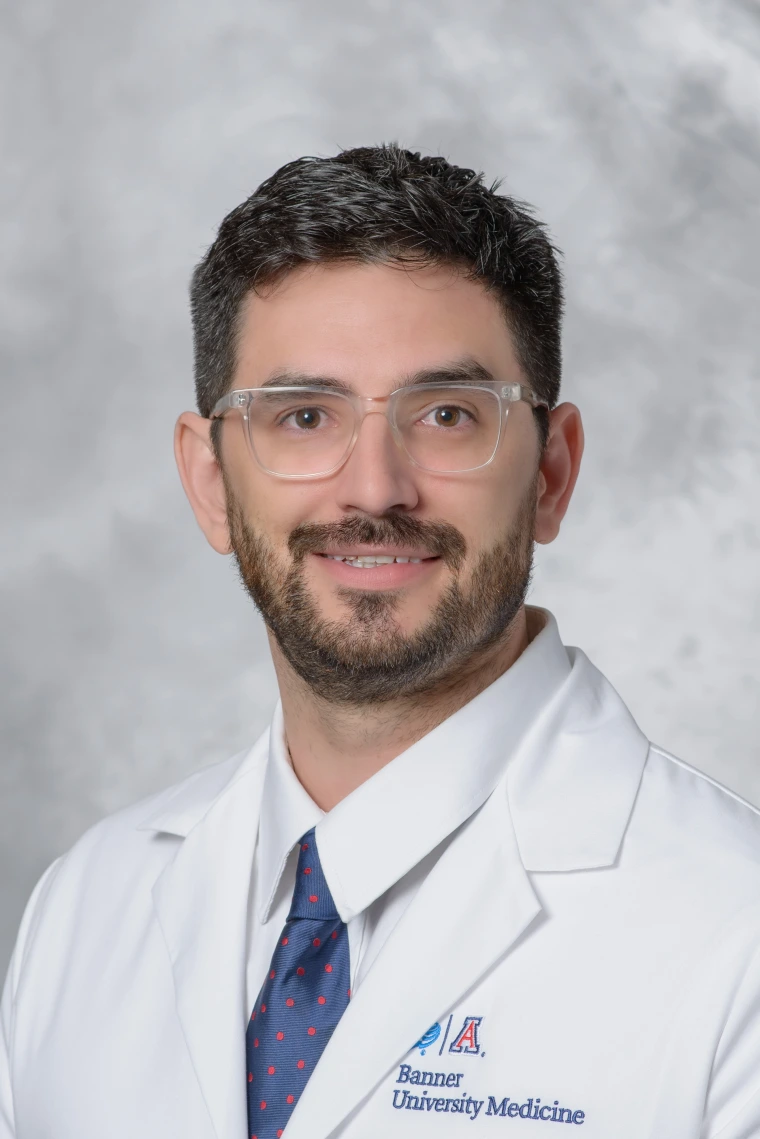
Christopher Miller, MD, MS

Janet Black, C-TAGME

Michele Dalmendray, C-TAGME
About Our Program

- A Case Load That Builds Confidence
As one of the Southwest’s busiest academic radiology departments, we interpret more than a million studies each year, giving residents unmatched exposure to volume, variety and complexity.
- Education With a Track Record
Consistent daily teaching, strong faculty mentorship, an effective physics curriculum and protected study time create a powerful educational foundation. The proof: 100% first-time Core Exam pass rate over the past four years.
- Opportunities That Open Doors
With research opportunities, away rotations, ESIR training and national presentations, our residents build the kind of portfolios that open doors to elite fellowships.
- A Culture That Lifts You Up
A supportive faculty, thoughtful call structure and reliable backup create a resident-centered environment where trainees are challenged appropriately, not overextended.
- Where Training Meets Quality of Life
With affordable living, abundant outdoor recreation, year-round sunshine and a UNESCO-recognized culinary scene, Tucson offers an environment where residents can truly thrive.

Residents train across a rich mix of clinical environments, anchored by Banner – University Medical Center Tucson, a modern 11‑story hospital tower with 490 beds and state‑of‑the‑art imaging, including dual‑energy CT.
Training also includes rotations at the Southern Arizona VA, a dedicated Breast Imaging Center, the fully funded AIRP Radiologic Pathology Course, and optional away or research electives. Across Banner’s Tucson campuses, residents interpret more than 1 million studies per year, ensuring exposure to broad and complex pathology.

Our four‑year Diagnostic Radiology Residency Program builds on a completed internship year and provides broad, progressive and customizable training.
A balanced call system with real backup ensures residents are challenged — not overwhelmed. Emergency radiology faculty read remotely overnight, and subspecialty attendings are available from home for pediatric, neuro, MSK and other consults, giving residents strong support while still fostering independence.
PGY‑2 to PGY‑4: Core Radiology Training
Residents rotate through all major subspecialties — pediatrics, GU, GI, chest, MSK, interventional/angiography, neuroradiology, nuclear radiology, mammography, ultrasound, abdominal CT and MRI — developing a strong foundation across the field. Training emphasizes progressive responsibility, close faculty supervision and structured feedback, including biannual meetings with the program director.
Residents participate in the ACR In‑Training Examination and benefit from a comprehensive board‑preparation system with a physics course, faculty‑led study groups and a structured review curriculum.
PGY‑5: Flexible, Subspecialty‑Focused Year
The final year offers significant customization through one‑year, six‑month or three‑month subspecialty blocks, with at least three months guaranteed in the resident’s top‑choice area. Elective research time is available, and all residents complete at least one scholarly project. Explore our research opportunities.

Our newly renovated department home became move-in ready in December 2025 and was thoughtfully designed to support learning, collaboration and wellness. Bright, modern spaces create a comfortable and connected environment where trainees can thrive.
Key features include:
- A spacious trainee lounge for studying, relaxing and building community
- A 60-seat conference room equipped for lectures, case conferences and hybrid learning
- Multiple small reading rooms designed for quiet study and online ABR examinations
- Dedicated chief resident offices that support leadership activities and meetings
- Collaborative huddle spaces and a full kitchen that foster team-based learning, connection and community
Post-Residency
Most of our residents pursue fellowship training after graduation, consistently matching into top programs across the country. Explore the fellowship placements of our recent graduating classes below.
University of Arizona
1 – Advanced Musculoskeletal Imaging
Barrow Neurological Institute at SJHMC-AZ
1 – Neuroradiology
University of Colorado School of Medicine
1 – Neuroradiology
Duke University School of Medicine
1 – Abdominal Imaging
Mayo Clinic School of Graduate Medical Education-AZ
1 – Musculoskeletal Radiology
Northwestern Medicine
1 – Body MRI
Stanford University School of Medicine
1 – Body Imaging
1 – Neuroradiology
University of Arizona
1 – Abdominal Radiology
2 – Breast Imaging
MGB-Massachusetts General Hospital
1 – Musculoskeletal Radiology
Mayo Clinic School of Graduate Medical Education-AZ
1 – Breast Imaging
Oregon Health & Science University
1 – Musculoskeletal Radiology
University of Michigan
1 – Musculoskeletal Radiology
University of Texas Southwestern Medical School - Dallas
1 – Neuroradiology
1 – Academic Practice
University of Arizona
3 – Neuroradiology
Barrow Neurological Institute at SJHMC-AZ
2 – Neuroradiology
Brigham & Women’s Hospital
1 – Abdominal Imaging and Intervention
Mayo Clinic School of Graduate Medical Education - MN
1 – Breast Imaging
Stanford University School of Medicine
1 – Neuroradiology
1 – Pediatric Imaging
1 – Academic Practice
University of Arizona
1 – Interventional Radiology Independent Residency
Barrow Neurological Institute at SJHMC-AZ
1 – Neuroradiology
Cincinnati Children’s Hospital
1 – Pediatric Radiology
Emory University SOM-GA
1 – Neuroradiology
Mayo Clinic School of Graduate Medical Education - AZ
1 – Breast Imaging
Stanford Health Care
1 – Body Imaging
1 – Cardiothoracic Imaging
U Texas MD Anderson Cancer Center
1 – Breast Imaging
University of Utah
1 – Neuroradiology
How To Apply
We are excited to invite motivated and passionate candidates to join the College of Medicine – Tucson Diagnostic Radiology Residency Program. We support a dynamic training environment, and our program is designed to cultivate the next generation of leaders in radiology. Please find the information you need to navigate the application process seamlessly. Nine PGY-2 positions are currently open for NRMP match for the year following the clinical year.
The required preliminary year (PGY-1) positions are independent of our program and candidates must apply for these separately. Available PGY-1 positions in Tucson are:
| Type | Location | Area | Contact |
|---|---|---|---|
| Preliminary Year | College of Medicine – Tucson | Internal Medicine Residency | Maria R. Longoria, Program Manager |
| Preliminary Year | College of Medicine – Tucson | General Surgery Residency | Sonia Romo, MA, Program Manager |
| Transitional Year | Tucson Medical Center Health Medical Education (THMEP) | Transitional Residency | Jennifer Sammons, Program Coordinator |
| Transitional Year | Northwest Healthcare | Transitional Residency | Jessica Brooks, Program Coordinator |
- ERAS application
- Curriculum vitae formatted to include month/year for all educational and employment periods; please address any gaps in time.
- Personal statement
- Medical school transcripts
- Medical Student Performance Evaluation (MSPE)
- Three current letters of recommendation (LOR), dated no more than 12 months prior to the application date. Each letter should be on official letterhead and signed by the reference giver.
- Passing score required on United States Medical Licensing Examination (USMLE) Step 2
- ECFMG certificate (for IMG)
Deadline
The deadline for complete applications through ERAS is November 1 of the current year. Please note that only completed applications will be reviewed by the College of Medicine – Tucson Radiology Residency Selection Committee.
Applicants who are invited to interview at our program will meet with the program director and three faculty members on the Residency Selection Committee. The committee finalizes the match list after reviewing all of the applicants’ materials and interview evaluations.
Please note, if you receive an interview for radiology, and not for one of the preliminary programs, and are interested in interviewing with one of these programs, please contact the residency program senior manager, Janet Black, before December.
Janet Black, C-TAGME
Residency Programs

Learn about our department’s independent interventional radiology program.

Learn about our department’s integrated interventional radiology program.

Check out our newest residency program in Nuclear Medicine.
Training in Tucson
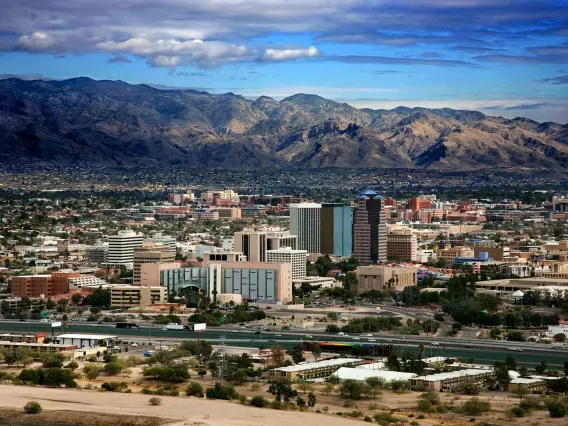

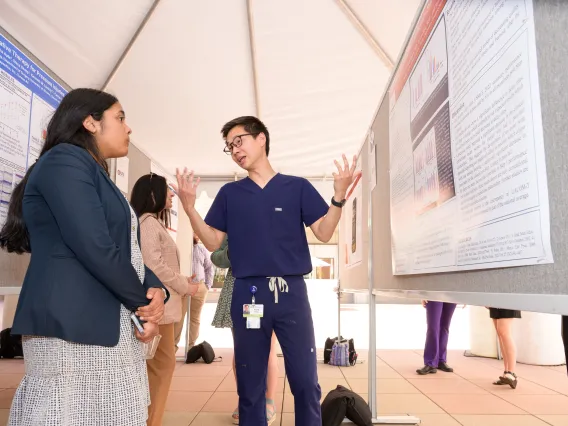


Learn more about the residency and fellowship programs at the College of Medicine – Tucson.
Janet Black, C-TAGME
Senior Manager, Residency Program
520-626-7402
janetb@arizona.edu