

Radiology and Imaging Sciences
Nuclear Medicine Residency Program
ACGME Initial Accreditation | April 2026
Three-Year Program | PGY-2 through PGY-4
SNMMI Therapy Center of Excellence
The Nuclear Medicine Residency Program at the University of Arizona College of Medicine – Tucson is a newly accredited, three-year ACGME training program based at Banner – University Medical Center Tucson. Our program offers a rigorous, comprehensive educational experience that prepares residents for independent practice and board certification in nuclear medicine, with a curriculum designed around the full spectrum of modern molecular imaging and radiopharmaceutical therapy.
Situated within one of the nation’s leading academic medical centers, residents train alongside subspecialty faculty in a high-volume, clinically diverse environment. The program integrates structured didactics, progressive clinical responsibility, protected research time and robust assessment frameworks — all grounded in the six ACGME core competencies. From the first year onward, residents are embedded in a culture of inquiry, patient safety and multidisciplinary collaboration that mirrors the demands of contemporary nuclear medicine practice.
As part of the Department of Radiology and Imaging Sciences, our residency benefits from close collaboration with diagnostic radiology, interventional radiology, radiation oncology, medical oncology, endocrinology and cardiology — offering a breadth of interdisciplinary experience that few programs can match.
Trainees receive instruction at an SNMMI-Designated Comprehensive Radiopharmaceutical Therapy Center of Excellence. Our division is recognized at the highest level for excellence in theranostics and radiopharmaceutical therapy — a distinction that directly shapes what residents learn and experience and makes them prepared to lead.
Clinical Training
Clinical training at our program is defined by genuine depth and breadth. Residents engage with a high volume of diagnostic and therapeutic cases across the full range of nuclear medicine subspecialties — general nuclear medicine, PET/CT oncology and infection imaging, nuclear cardiology, pediatric nuclear medicine and advanced theranostics. Studies are interpreted from multiple Banner campuses, ensuring exposure to a wide and varied patient population across both academic and community practice settings.
A defining feature of our program is its commitment to radiopharmaceutical therapy. Residents take an active, supervised role in managing complex treatments including Lutathera (Lu-177 DOTATATE), Pluvicto (Lu-177 PSMA), Radium-223, Yttrium-90 microspheres and high-dose I-131 for both benign and malignant thyroid disease. Weekly theranostics clinics provide longitudinal patient care experience — from initial consultation through treatment planning, administration, post-therapy imaging and follow-up — preparing residents for a practice landscape increasingly defined by theranostic approaches.
As residents advance through PGY levels, they assume increasing responsibility in protocol selection, case triage, report generation, and supervision of medical students and junior trainees. This graduated autonomy is intentional, fostering confidence and independent clinical judgment in parallel with knowledge acquisition.
Program Director
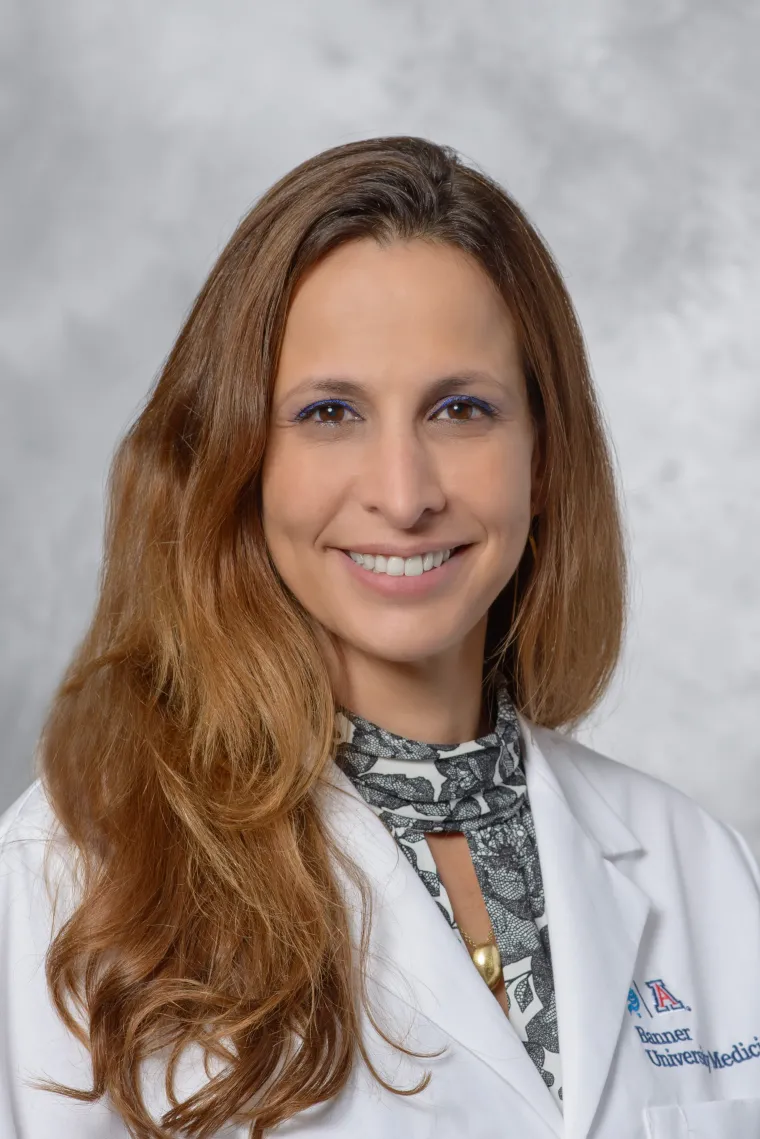
Bital Savir-Baruch, MD, MBA, FACNM
Clinical Specialties
Teaching Faculty

Tina Buehner, PhD
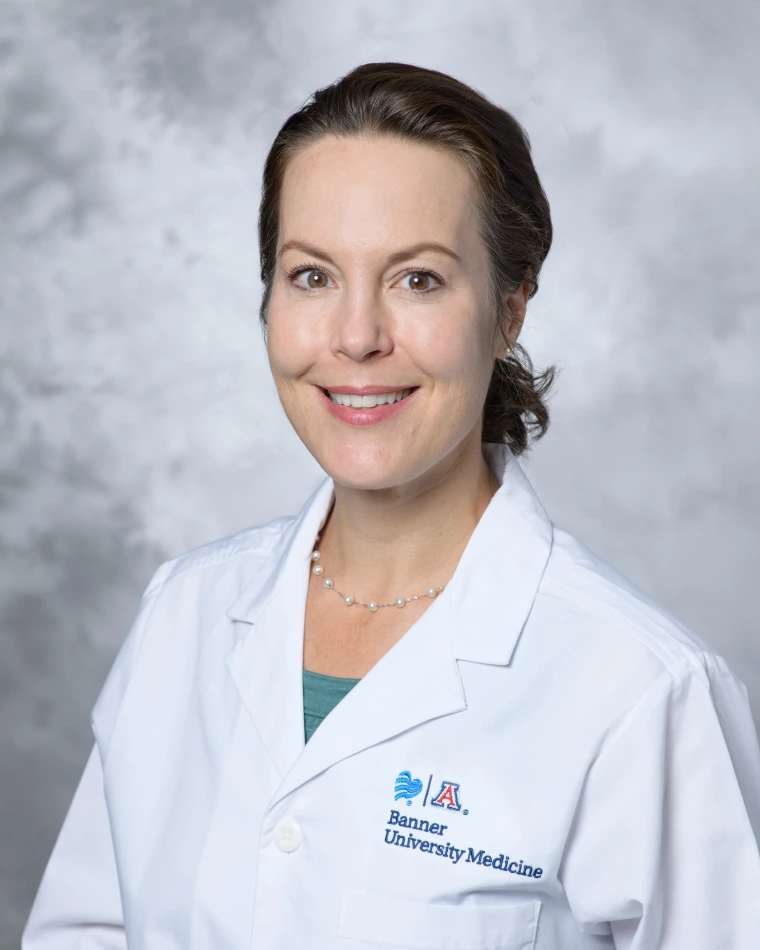
Holly Thompson, MD, MPH
Clinical Specialties
Rotations
Nuclear Medicine / PET & Theranostics
Core rotation across all three years
General Nuclear Medicine
Foundational diagnostic imaging across organ systems
Nuclear Cardiology
CZT and SPECT/CT, with research integration
Pediatric Nuclear Medicine
Integrated research component
Radiopharmacy / Physics / Research
Hot lab, NRC compliance, dosimetry, instrumentation
CT Chest & Abdomen/Pelvis Correlation
Cross-sectional interpretation integrated with nuclear findings
Head & Neck Imaging
CT/MRI correlation with nuclear medicine applications
Radiation Oncology / Hematology-Oncology
Multidisciplinary oncologic care and tumor boards
Technologist / Radiation Safety
NRC-compliant lab experience and safety operations
Education and Scholarship
Our didactic curriculum is comprehensive and deliberately structured. Residents complete an 80-hour ASNC/SNMMI NRC-based radiation safety and physics course, providing the scientific foundation required for Authorized User training and board certification. Weekly educational conferences cover clinical nuclear medicine, basic science, instrumentation, radiopharmaceutical chemistry, radiation biology and radiation protection — spanning the full scope of ACGME program requirements.
Residents participate in journal clubs, morbidity and mortality conferences, interesting case conferences and multidisciplinary tumor boards in collaboration with oncology, endocrinology, cardiology and surgery teams. Each resident is expected to lead at least one formal didactic lecture per year under faculty mentorship, developing academic communication skills alongside clinical expertise. Participation in SNMMI and ACNM national meetings, webinars and institutional grand rounds is encouraged and supported.
Protected research time is integrated into every year of training. Residents are expected to contribute to an ongoing clinical trial, quality improvement initiative or original research project, culminating in a scholarly product — whether a peer-reviewed publication, conference presentation or institutional report. The program’s research-rich environment, with active clinical trials in molecular imaging and theranostics, provides a natural infrastructure for meaningful resident scholarship.
How To Apply
We are excited to invite motivated and passionate candidates to join the College of Medicine – Tucson Nuclear Medicine Residency Program. We support a dynamic training environment, and our program is designed to cultivate the next generation of leaders in radiology.
One PGY-2 position is currently open for July 1, 2027.
- Application
- Curriculum vitae formatted to include month/year for all educational and employment periods; please address any gaps in time
- Personal statement
- Medical school transcripts
- Medical Student Performance Evaluation (MSPE)
- Three current letters of recommendation (LOR), dated no more than 12 months prior to the application date. Each letter should be on official letterhead and signed by the reference giver.
- Pass on the United States Medical Licensing Examination (USMLE) Step 1 and Step 2 with a minimum score of 250
- ECFMG certificate (for IMG)
Contact Amy Jennings, program coordinator senior, for more information.

Amy Jennings
Training in Tucson



Why Tucson
Quality of life
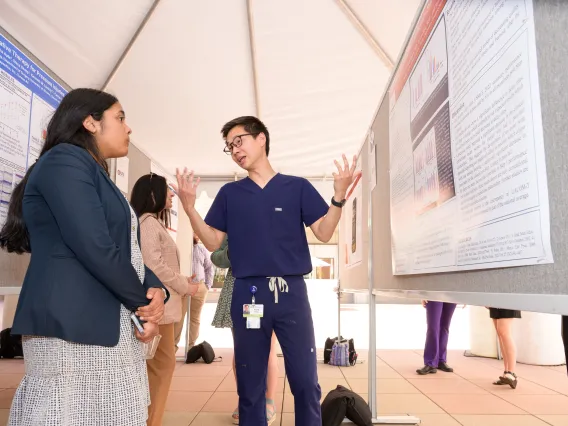
Tucson offers a high quality of life with an affordable cost of living, abundant sunshine, rich cultural diversity, and a vibrant food and arts scene rooted in the Sonoran Desert.
Outdoor recreation
Surrounded by five mountain ranges and Saguaro National Park, Tucson is a gateway to world-class hiking, cycling, rock climbing and birding year-round.
Academic environment
The University of Arizona is a flagship R1 research institution. Residents benefit from a stimulating intellectual community and access to university resources, libraries and events.
Location and access
Tucson is 60 miles from the U.S.–Mexico border, 90 minutes from Phoenix and well-connected internationally — offering a uniquely cosmopolitan yet close-knit community.
Residency Programs

Learn about our department’s diagnostic radiology residency program.

Learn about our department’s interventional radiology - independent program.

Learn about our department’s interventional radiology - integrated program.

Learn more about the residency and fellowship programs at the College of Medicine – Tucson.
Amy Jennings
Program Coordinator, Senior
520-626-9077
ajennings@arizona.edu